
The Role of Yoga in Improving Mental Focus and Emotional Balance
Your mind processes 6,200 thoughts daily. Most people can’t focus on a single task for more than 40 seconds without distraction.
Here’s the deal: We’re drowning in information while starving for attention. Mental clarity has become rare in our hyperconnected world.
Research from Microsoft shows human attention span dropped from 12 seconds in 2000 to just 8 seconds today. Goldfish officially have better focus than most adults.
But here’s the kicker: Ancient yoga practices offer proven solutions to modern mental chaos. Thousands explore these techniques through programs like yoga teacher training where mental discipline becomes as important as physical postures.
Let’s discover how yoga restores your ability to focus deeply and respond emotionally with wisdom.
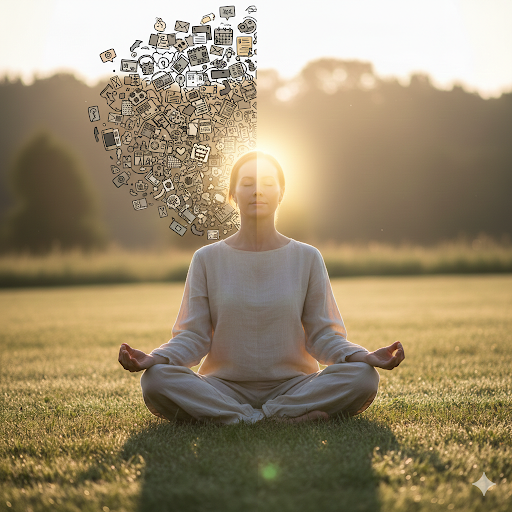
[Image Alt Text: Person meditating in lotus pose with illustrated thought bubbles clearing from cluttered to calm]
Image Prompt: Create a transformative image showing a person in meditation with two stages—left side shows many chaotic thought bubbles swirling around their head, right side shows the same person with a clear, peaceful mind represented by a single calm light.
Mental Focus and Emotional Health in Modern Life
Modern life creates the perfect storm for scattered attention. Notifications, emails, deadlines—your brain never rests.
The surprising truth? Multitasking doesn’t exist. Your brain rapidly switches between tasks, creating cognitive exhaustion.
Every time you check your phone, your brain requires 23 minutes to regain deep focus. That’s according to University of California research.
Think about it this way: If you check notifications every 30 minutes, you never achieve genuine concentration. Your mind exists in perpetual shallowness.
What science shows: Constant task-switching elevates cortisol levels. Your brain interprets scattered attention as a threat signal.
Here’s what most people miss: Poor focus and emotional instability are interconnected. When attention jumps constantly, emotions become equally reactive.
Dr. Amishi Jha’s research proves attention training directly improves emotional resilience. A focused mind creates emotional space for wise responses rather than knee-jerk reactions.
How Yoga Improves Concentration

Yoga enhances focus through multiple neurological pathways. It’s not magical—it’s methodical brain training.
Want to know the best part? The benefits appear faster than expected.
Every yoga pose requires concentrated attention. Balance in tree pose demands you focus on one point—your drishti.
Listen closely: When you physically practice holding attention on a fixed point, you’re strengthening neural pathways for concentration.
A 2023 study found eight weeks of yoga practice increased sustained attention by 27%. Participants outperformed control groups on focus tests.
Now here’s where it gets interesting: Physical steadiness creates mental steadiness. When you hold warrior II for two minutes, your body learns presence despite discomfort.
This translates directly off the mat. That capacity to remain focused despite distractions becomes accessible in daily life.
The Yoga Sutras (Patanjali, Chapter 1, Verse 2) state: “Yoga is the cessation of the fluctuations of the mind.”
Yoga also heightens proprioception—your body’s spatial awareness. When you notice exactly where your weight sits in your feet, you’re fully present.
The reality? You can’t simultaneously worry about tomorrow’s meeting and feel the stretch in your hamstring. Sensory awareness anchors attention in the now.
[Image Alt Text: Yoga practitioner in tree pose]
Breath Awareness and Emotional Control
Your breath is the bridge between body and mind. It’s also your most accessible tool for emotional regulation.
Here’s the real secret: Every emotion has a corresponding breathing pattern. Anxiety creates short, shallow breaths. Anger produces forceful exhalations.
Get this: The breath-emotion connection works both ways. Emotions change breathing, but changing breathing also shifts emotions.
When anger rises, deliberately slowing your breath interrupts the emotional cascade before it overwhelms you.
Dr. Richard Brown’s research shows specific pranayama patterns reduce anxiety symptoms by 44% within weeks.
Most people breathe unconsciously 20,000 times daily. Yoga teaches you to notice these automatic breaths.
You might be wondering: Why does awareness matter? Because you can’t regulate what you don’t notice.
During practice, count your inhales and exhales. Notice where breath enters your body—nose, throat, chest, belly.
This seemingly basic practice creates profound emotional intelligence. You begin catching emotional reactions before they control you.
Pay attention to this: Different breathing patterns create distinct emotional states.
For anxiety: Extend your exhale longer than your inhale. Try inhaling for four counts, exhaling for eight.
For balance: Equal breathing—same length inhale and exhale—creates emotional equilibrium.
The bottom line? Your breath becomes a portable emotional regulation device, available anytime.
Yoga Practices That Support Emotional Stability
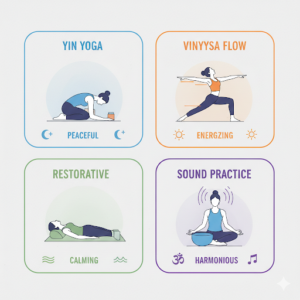
Specific yoga styles target emotional regulation more effectively than others.
Here’s what nobody tells you: Not all yoga serves the same purpose. Matching practice to emotional need makes all the difference.
Yin yoga class holds passive poses for 3-5 minutes. This extended stillness allows stored emotions to surface and release.
The truth is: Emotions live in your body. Tight hips often hold unprocessed stress. Long holds create space for release.
When emotions feel overwhelming, flowing movement helps. Linking breath with motion in sun salutations creates moving meditation.
Think about it this way: You’re channeling emotional energy into physical expression rather than mental rumination.
Restorative poses using props activate your parasympathetic nervous system. This shifts you from reactive to receptive emotional states.
Wait—there’s more: Supported child’s pose and legs-up-the-wall create physical safety signals. Your brain interprets this relaxation as emotional safety.
Chanting and sounds to heal create vibrational frequencies that affect emotional centers in your brain. The vagus nerve—key to emotional regulation—responds to vocal vibrations.
Research reveals: Group chanting synchronizes heart rates and breathing patterns, creating collective emotional coherence.
[Image Alt Text: Four different yoga styles illustrated showing their emotional benefits with corresponding mood indicators]
Meditation and Mindfulness in Daily Life
Meditation is yoga for the mind. Where physical poses train the body, meditation trains attention and awareness.
Here’s the deal: You don’t need hours of sitting. Micro-meditations woven through your day create remarkable transformation.
Begin with two minutes. Sit comfortably, close your eyes, and watch your breath.
The surprising truth? Most people can’t do this for even 60 seconds initially. Your mind will wander dozens of times.
That’s perfect. The practice isn’t maintaining focus—it’s noticing when focus drifts and gently returning it.
Washing dishes mindfully—feeling water temperature, noticing soap texture—trains the same awareness as formal meditation.
Walking meditation, eating meditation, even brushing teeth with full attention builds mindfulness capacity.
Now here’s where it gets interesting: Advanced meditation cultivates “witness consciousness”—observing thoughts without identifying with them.
You notice “I’m having an anxious thought” rather than “I am anxious.” This distinction creates emotional freedom.
Create meditation touchpoints. Three conscious breaths before meals. One minute of stillness after arriving home.
The reality? These micro-practices accumulate. Ten 2-minute sessions throughout your day equal 20 minutes of meditation without dedicated time blocks.
Long-Term Emotional Benefits of Yoga
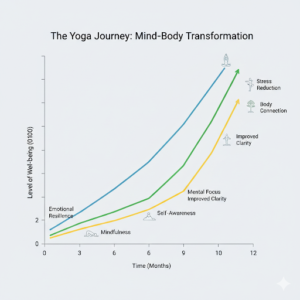
Consistent practice creates cumulative emotional transformation. The benefits compound over months and years.
Experts agree: Yoga isn’t a quick fix—it’s a life skill that deepens with time.
Long-term practitioners demonstrate 42% greater stress resilience than non-practitioners according to Boston University research.
You still experience difficult emotions, but they don’t destabilize you. Sadness comes and goes. You remain centered through emotional weather.
Years of practice develop profound self-knowledge. You recognize emotional patterns before they control behavior.
Here’s what most people miss: Self-awareness precedes self-regulation. You can’t change patterns you don’t recognize.
Yoga creates space between stimulus and response. Viktor Frankl wrote: “Between stimulus and response there is a space. In that space is our power to choose.”
The plot twist? As you develop focus and emotional balance, your relationships transform. You listen better. React less defensively.
Research shows couples who practice yoga together report 31% higher relationship satisfaction.
Long-term practitioners report decreased mental fog and improved decision-making. Your mind becomes less cluttered, allowing wisdom to emerge.
[Image Alt Text: Progression chart showing emotional and mental improvements over time with yoga practice]
Image Prompt: Create a line graph showing three ascending curves over 12 months: “Emotional Resilience,””Mental Focus,” and “Self-Awareness,” with yoga pose icons at milestone points (3, 6, 12 months) and brief benefit labels.
Conclusion: Your Mental-Emotional Revolution
Mental focus and emotional balance aren’t gifts some people have and others lack. They’re skills you cultivate through consistent practice.
Let me explain: Every moment on your mat trains your brain. Every conscious breath rewires emotional responses. Every meditation strengthens attention.
The ancient yogis understood what neuroscience now confirms—the mind is trainable, emotions are workable, and awareness is the key to both.
As the Bhagavad Gita (Chapter 6, Verse 5) teaches: “Elevate yourself through the power of your mind, and not degrade yourself, for the mind can be the friend and also the enemy of the self.”
Start today. Five minutes of practice. Three conscious breaths. One moment of stillness.
Your focused, balanced mind is waiting to emerge.