Advanced Metal Cutting Technology: Delivering Perfect Angled Edges
Modern fabrication demands precision, speed, and consistency, qualities that shape the success of construction, metalworks, interiors, industrial machinery, architecture, and custom engineering projects across the region. As industries shift toward high-accuracy manufacturing, bevel sheet laser cutting in Dubai has become the preferred method for achieving flawless angled edges and structurally reliable components. Unlike traditional cutting techniques that leave rough surfaces or require excessive grinding, laser-based beveling delivers cleaner results, enhanced durability, and greater dimensional accuracy.
Builders, craftsmen, engineers, and designers rely on advanced cutting solutions to meet intricate project requirements. Whether it involves preparing plates for welding, creating decorative edges, or producing custom components in precise geometries, modern bevel cutting systems ensure efficiency and perfection. The adoption of cutting-edge technology has reshaped the way metal is processed, offering superior results while significantly reducing labor time, material waste, and production delays.
Why Bevel Cutting Matters in Modern Fabrication
1. Essential for Stronger, Professional-Grade Welding
Beveling prepares metal edges for high-strength welding by creating the right angle for complete penetration. In industrial fabrication, welding is only as strong as the surface it bonds with. Proper bevel angles allow welders to apply filler material smoothly, reducing weak spots and ensuring long-term durability. From pipelines to structural frames, angled laser cuts help maintain uniformity and minimize post-weld finishing, making the fabrication process faster and more reliable.
2. Enhances Structural Integrity in Large-Scale Projects
In heavy engineering, metal plates must align perfectly for optimal load distribution. Precision beveling ensures that plates fit without gaps, preventing stress fractures and premature wear. Industries like construction, shipbuilding, oil and gas, and transportation rely on expertly angled edges to meet strict safety standards. Laser bevel cutting supports these requirements by offering consistent depth, angle accuracy, and repeatability that manual cutting methods struggle to match.
3. Ideal for Complex Geometries and Custom Designs
Custom fabrication often includes intricate shapes, patterns, or joints where traditional cutting tools fall short. Laser beveling excels at forming detailed profiles with angled edges, enabling seamless assembly and visually clean finishes. Whether designing bespoke furniture, architectural panels, industrial machinery parts, or artistic installations, laser-based bevel cutting offers unmatched flexibility and precision. This allows designers and engineers to bring creative concepts to life without limitations.
4. Reduces Post-Processing and Finishing Time
Grinding, smoothing, and correcting uneven edges can slow down production. Laser-cut bevels minimize these steps because they produce clean, burr-free edges in a single pass. Manufacturers save time, energy, and labor while improving output consistency. By eliminating secondary processes, projects move forward faster and reduce operational costs. This makes laser beveling especially advantageous for high-volume production environments where efficiency is essential.
5. Supports Modern Automation and Digital Fabrication
Laser bevel cutting systems integrate seamlessly with digital design software, CNC automation, and robotics. This allows metal sheets to be processed directly from CAD drawings with perfect accuracy. Automation reduces human error, boosts productivity, and ensures uniform quality across multiple batches. In industries moving toward Industry 4.0, digital bevel fabrication supports smart manufacturing, scalability, and rapid prototyping without compromising precision.
6. Perfect for Both Thin and Thick Metal Applications
Whether working with thin decorative sheets or thick structural plates, laser bevel technology adapts to a wide range of metal thicknesses. The beam intensity and angle control ensure consistent results regardless of material density. This versatility is invaluable in fabrication shops that handle diverse projects, from commercial interiors and machinery fabrication to heavy infrastructure components. It ensures a smooth workflow without the need for multiple cutting systems.
Understanding the Technology Behind Advanced Bevel Laser Cutting
How Laser Beveling Works
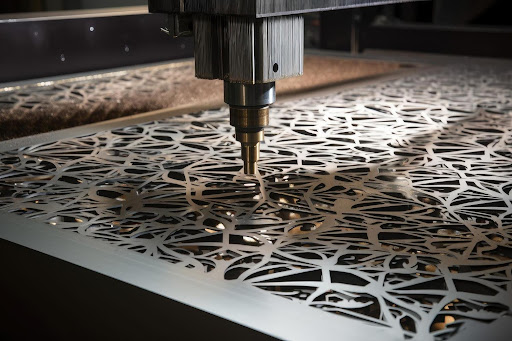
Laser bevel cutting uses a high-powered focused beam to melt and shape metal edges at precise angles. The machine tilts the cutting head or rotates the beam path to create beveled edges that match the required design. Real-time sensors and digital control ensure that the angle remains uniform across curved, straight, or multi-axis paths. The result is a smooth, clean bevel that requires little to no finishing.
Types of Bevels Commonly Used
Several bevel shapes support different welding and fabrication needs. These include V-bevels, X-bevels, Y-bevels, and K-bevels, each tailored for specific joint strengths and welding directions. Laser cutting systems allow these bevel types to be produced with consistent accuracy, even on thick or hardened metal. This flexibility helps industries meet engineering requirements while maintaining production efficiency.
Materials Compatible with Laser Beveling
Modern bevel laser machines work with various metals including stainless steel, carbon steel, aluminum, copper alloys, and galvanized sheets. This compatibility supports a wide range of industries, from architecture and HVAC to oil and gas. Laser technology is particularly effective for reflective metals, thanks to improved beam stability and high-precision control features found in next-generation systems.
Advantages Over Traditional Cutting Methods
Conventional beveling methods rely on grinding wheels, mechanical cutters, or torch-based tools, which often result in uneven edges, heat distortion, or material wastage. Laser beveling eliminates these issues by operating with controlled heat input and high accuracy. It reduces deformation, ensures clean separations, and enhances material integrity. The result is a superior finish with fewer production interruptions and higher overall efficiency.
Environmental and Economic Benefits
Laser beveling consumes less energy, minimizes scrap waste, and reduces the need for consumables like blades or grinders. This makes the process more environmentally friendly and cost-effective. Additionally, cleaner cuts reduce the risk of defects, saving businesses from expensive rework or material loss. The long-term economic benefits have made bevel laser cutting a preferred solution for sustainable manufacturing practices.
Conclusion
Bevel cutting plays a crucial role in modern fabrication, transforming how industries shape, assemble, and strengthen metal components. As demand for precision, efficiency, and flawless finishing continues to rise, advanced technologies ensure that every project, big or small, meets the highest standards of quality and performance. From structural integrity to aesthetic refinement, bevel cutting enhances every stage of production.
Businesses depend on high-efficiency bevel cut service providers to meet complex design requirements with sharp accuracy and consistent output. With laser technology supporting cleaner edges and stronger welded joints, fabricators can execute their projects with confidence, speed, and precision.
Morshedi brings decades of expertise in metal fabrication, precision engineering, and advanced laser cutting solutions. Their team combines craftsmanship with modern technology to deliver reliable, high-quality results for construction, interiors, industrial design, and custom projects. With a strong commitment to accuracy and client satisfaction.